


How Conviction Drives Real Innovation
At some point in nearly every meaningful endeavor, there’s a moment of hesitation. This hesitation doesn’t usually come from within, but from the outside.
You share an idea. You outline a strategy. You explain what you are trying to build. And the response, often well-intentioned, is some version of, “That’s not how this usually works,” or “It’s not a viable approach.”
It’s easy to mistake that response for failure. But more often, it is something else entirely. It is a signal that what you are building does not yet fit the established pattern.
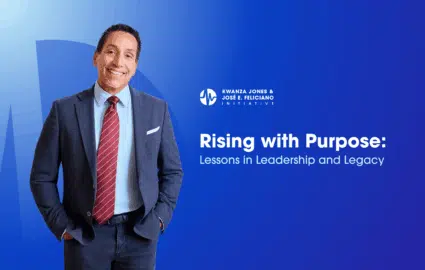
This perspective was at the heart of José E. Feliciano’s speech at the 14th Annual Silicon Valley Latino Leadership Summit (SVLLS), where he was honored with the Trailblazer Leadership Award. SVLLS is an event that brings together leaders across industries to exchange ideas and shape the future.
This article explores José’s insights on how excellence is defined.
Why “Not Viable” Often Means “Not Familiar”
Many ideas are dismissed not because they lack merit, but because most systems are designed to reward what is familiar. Institutions, industries, and decision-makers are trained to recognize patterns. Familiarity feels efficient. Precedent feels safe.
However, while pattern recognition is efficient, it can also be limiting. Innovation rarely emerges from perfect alignment with what already exists.
When an idea challenges conventional definitions of success, it can quickly be labeled “not viable.” That label is often less about the idea itself and more about discomfort with uncertainty.
The mistake many leaders make is assuming early skepticism is a definitive verdict. It isn’t. More often, it is simply a reflection of how narrowly success is defined at that moment in time.
New approaches demand patience, imagination, and a willingness to evaluate something before outcomes are obvious.
Redefining Excellence Before It Is Obvious
Excellence, especially early on, is not always easy to recognize.
It can look unfinished. It can look inefficient. It can look like a series of small, unglamorous steps rather than a polished result. Before something becomes widely accepted, it often appears incomplete or unconventional.
This is where a leader must do more than execute; you must define. Redefining excellence means deciding what matters most before external validation arrives. It means setting standards based on purpose, integrity, and long-term impact rather than short-term approval.
This is where conviction comes in.
Conviction Without Consensus
Strong leaders listen carefully to feedback, but they do not outsource belief. You need to understand the difference between useful critique and reflexive doubt. Consensus may come later—or not at all—but conviction is what carries the work forward in the meantime.
Therefore, you must be clear on what you are building and why. If your strategy is different, that difference should be intentional, not accidental. Conviction is strongest when it is informed by preparation, reflection, and a deep understanding of your own goals.
When consensus is absent, discipline becomes essential. Progress is made through consistent action, not constant reassurance. Step by step, brick by brick, the work takes shape, even when the outcome is not yet obvious to others.
Letting Time Do Its Work
Many results that feel inevitable in hindsight once looked improbable. Time has a way of revealing what early judgments cannot.
Initial reactions are shaped by comparison. Long-term outcomes are shaped by persistence. The work that endures is often the work that continued quietly, steadily, and intentionally when enthusiasm was limited.
Measuring progress over years instead of reactions creates space for real value to emerge.
The Responsibility of Those Who Persist
When you persist in building despite skepticism, the impact extends beyond your own outcomes. You widen the definition of what works and make space for others to imagine new possibilities.
Not every unconventional idea will succeed. But every meaningful shift begins with someone willing to build before the result is clear.
If you find yourself being told that your strategy isn’t viable, it may be worth asking a different question: not whether it looks familiar, but whether it is worth building anyway.
Excellence does not always announce itself at the beginning. Often, it reveals itself over time, through intention, consistency, and the courage to proceed without certainty.
Share this article: